What Is ERP? Complete Guide to Enterprise Resource Planning
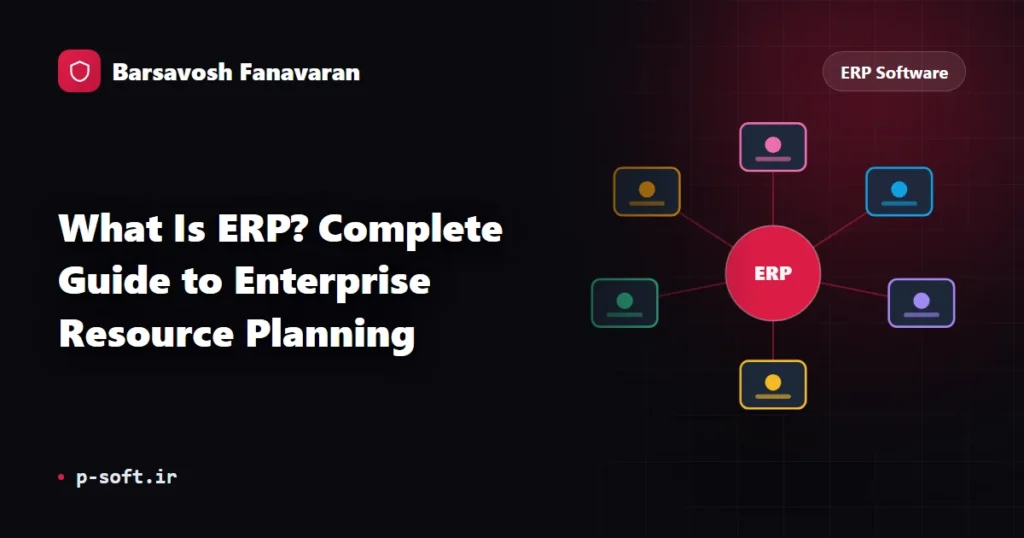
What is ERP? ERP is a comprehensive enterprise software system that integrates all core business processes — from sales and finance to inventory and human resources — into a single platform backed by one shared database. If your organization’s data is scattered across several disconnected applications and each department runs its own system, that fragmentation is precisely the problem enterprise resource planning is built to solve. This guide explains in plain language what ERP is, how it works, and when your business needs it.
Defining ERP: What Does Enterprise Resource Planning Mean?
ERP stands for Enterprise Resource Planning. An ERP system replaces a collection of siloed applications by placing every department on a single, shared data source. Data is entered once and is immediately available across the entire organization. When the sales team issues an invoice, the warehouse sees the updated stock, accounting generates the financial entry, and management gets a real-time report — all without re-keying information. This concept of a single source of truth is what sets an integrated enterprise software system apart from a patchwork of standalone tools.
How Does ERP Software Work?
At the heart of every comprehensive management system is a central database around which individual modules are built. Each module covers a specific functional area, but all modules draw from the same shared data. As a result, a change in one department is instantly reflected in every related department — ending discrepancies between the warehouse spreadsheet and the accounting ledger for good.
Which Business Functions Does ERP Cover?
- Sales and Customer Management: Order entry, invoice generation, and customer records managed in one place.
- Finance and Accounting: Revenue and expense management, financial documents, and accurate profit-and-loss reporting.
- Warehouse and Inventory: Stock control directly linked to the purchase and sales cycle.
- Procurement and Supply Chain: Supplier management and purchase orders aligned with real inventory needs.
- Human Resources: Personnel management, attendance tracking, and employee-related workflows.
Why Do Organizations Need ERP Software?
When every department runs a separate business application, data becomes duplicated and inconsistent, rework rises, and decision-making slows down and grows error-prone. A comprehensive enterprise software system resolves these challenges through data integration and delivers tangible benefits:
- Eliminates duplicate data entry and reduces human error.
- Provides real-time reports and a unified view of the entire organization.
- Brings process transparency and end-to-end traceability for every operation.
- Enables faster decision-making based on current data rather than guesswork.
When Does Your Business Need an ERP System?
Not every business needs a full ERP system from day one, but there are clear signals that the time to move to an integrated solution has arrived:
- Producing a simple report requires pulling data from several different applications.
- Inventory, sales, and accounting figures don’t match and no one knows which is correct.
- Organizational growth has turned cross-department coordination into a bottleneck.
- Reliance on manual spreadsheets has raised the risk of errors and data loss.
Common Mistakes in ERP Selection and Implementation
Many ERP projects fail to deliver results because of unrealistic expectations. The most common mistake is trying to go live with every module at once — a phased approach that starts with the most critical modules is almost always more successful. Another frequent error is underestimating the need for user training and for tailoring the software to the organization’s actual processes. An ERP designed for local regulatory and business requirements makes the implementation path significantly smoother.
Data ERP by Barsavosh Fanavaran (P-Soft)
ERP software is the information backbone of a modern organization — a tool that eliminates data fragmentation and drives productivity. Data ERP brings a factory’s sales, engineering, production, purchasing, warehouse, quality and finance together in one integrated system and comes in three plans (Start, Pro and Elite), so you can start with the essentials and grow from there. If you are looking for additional tools to streamline operations, explore our Avadar inventory and barcode management software or Hamahang for project management and support ticketing.
Frequently Asked Questions
What exactly does ERP mean and what is it used for?
ERP, or Enterprise Resource Planning, is software that unifies an organization’s core processes — including finance, sales, inventory, and human resources — in a single integrated system so that data is entered once and every department works from the same shared source.
Is ERP software only for large enterprises?
No. Modular ERP systems are scalable for small and medium-sized businesses as well. You can start with a handful of key modules and add more as your organization grows.
What is the difference between ERP and standalone software like accounting apps?
A standalone application covers only one functional area and holds its own separate data. In a comprehensive enterprise system, all functional areas share a single database — eliminating data discrepancies and duplicate work entirely.
How long does ERP implementation take?
It depends on the scope and number of modules. With a phased approach, the most critical modules can be deployed first, allowing the system to be built out gradually without disrupting ongoing business operations.
Is it better to use a locally built ERP system?
For many organizations, yes. A domestically developed enterprise software solution is typically better aligned with local financial and tax regulations, native language requirements, and familiar business processes — and dedicated support and customization are easier to obtain.
Further reading
- ERP Software Guide: Benefits and How to Choose the Right System
- How to Choose the Right ERP Software for Your Organization
- 7 Signs Your Business Needs ERP Software
Complete guide: ERP software
Have a project in mind?
The Barsavosh team is ready to design custom software and AI solutions for your business.
Contact us